

Files and the screening room
Every file, every version, every viewer.
A vault on both sides, uploads that pause and resume, versions that stack, and a screening room that records how far each guest actually watched.
What it replaces
Instead of a dozen tools
- A file-transfer service
- Shared drive folders
- Review links that record nothing
- Version numbers in file names
One place, one record.
The vault
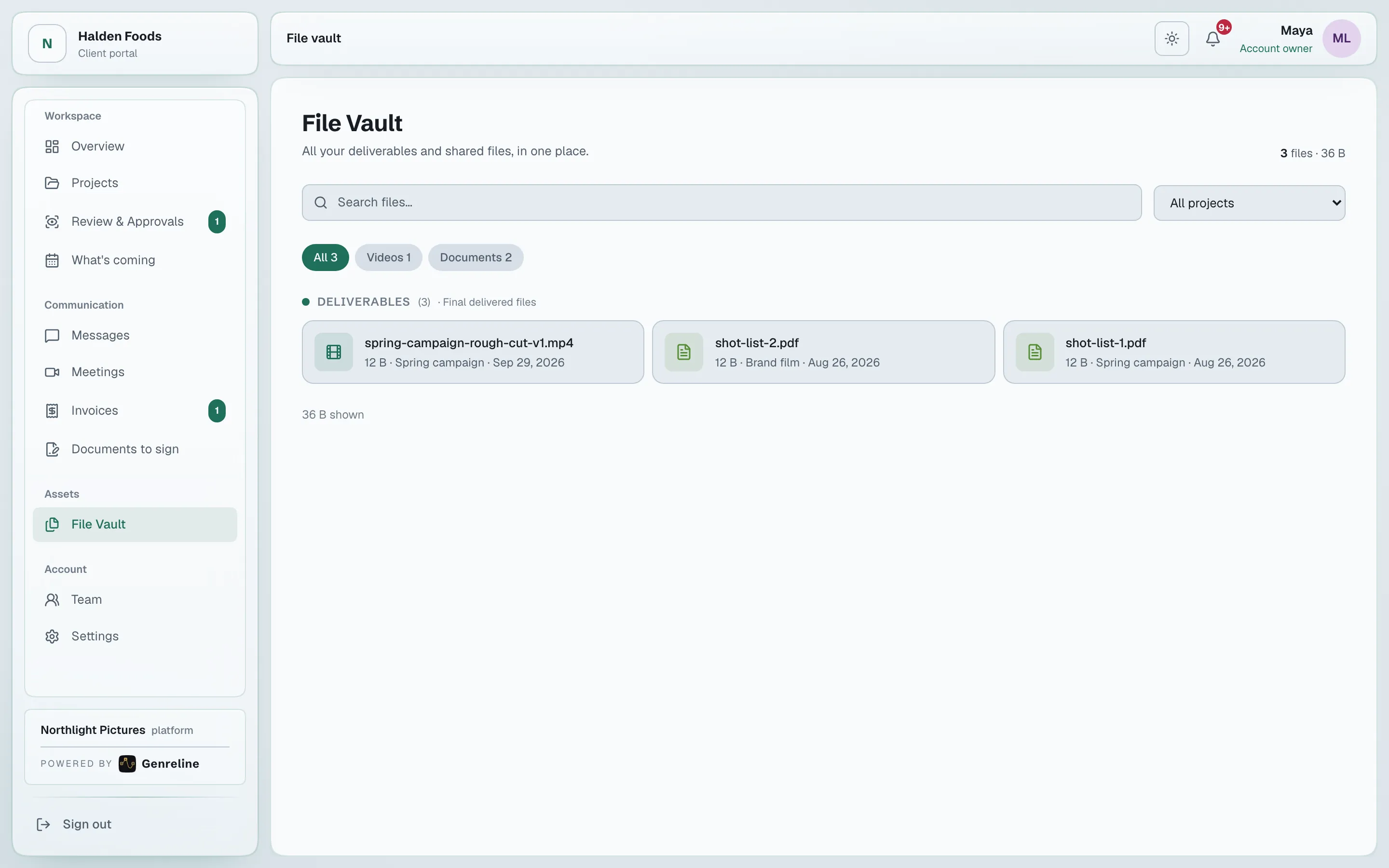
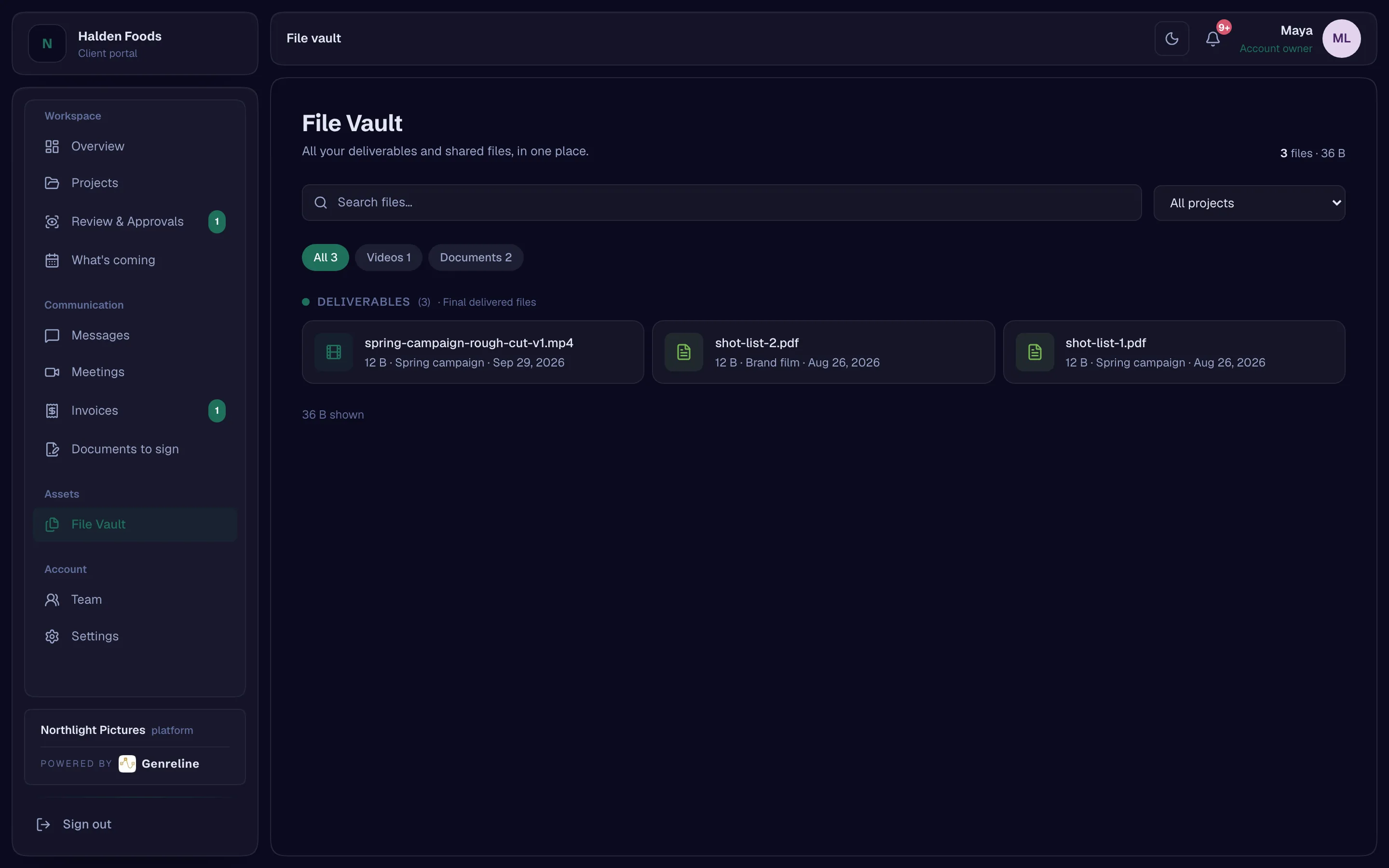
Files by production, on the studio’s side and the client’s. Uploads go straight to storage rather than through a server. Above 8 MB they pause and resume, and the server checks every part before it accepts the file.
- The vault, on both sidesAvailable
- Resumable large uploads — pausable, resumable, verified on the serverAvailable
- Storage quota enforced at three points; unverified studios cappedAvailable
Versions that stack
Upload a new version onto its predecessor. The vault shows the version number, and the approval knows which version it is about.
- File version stackingAvailable
The screening room
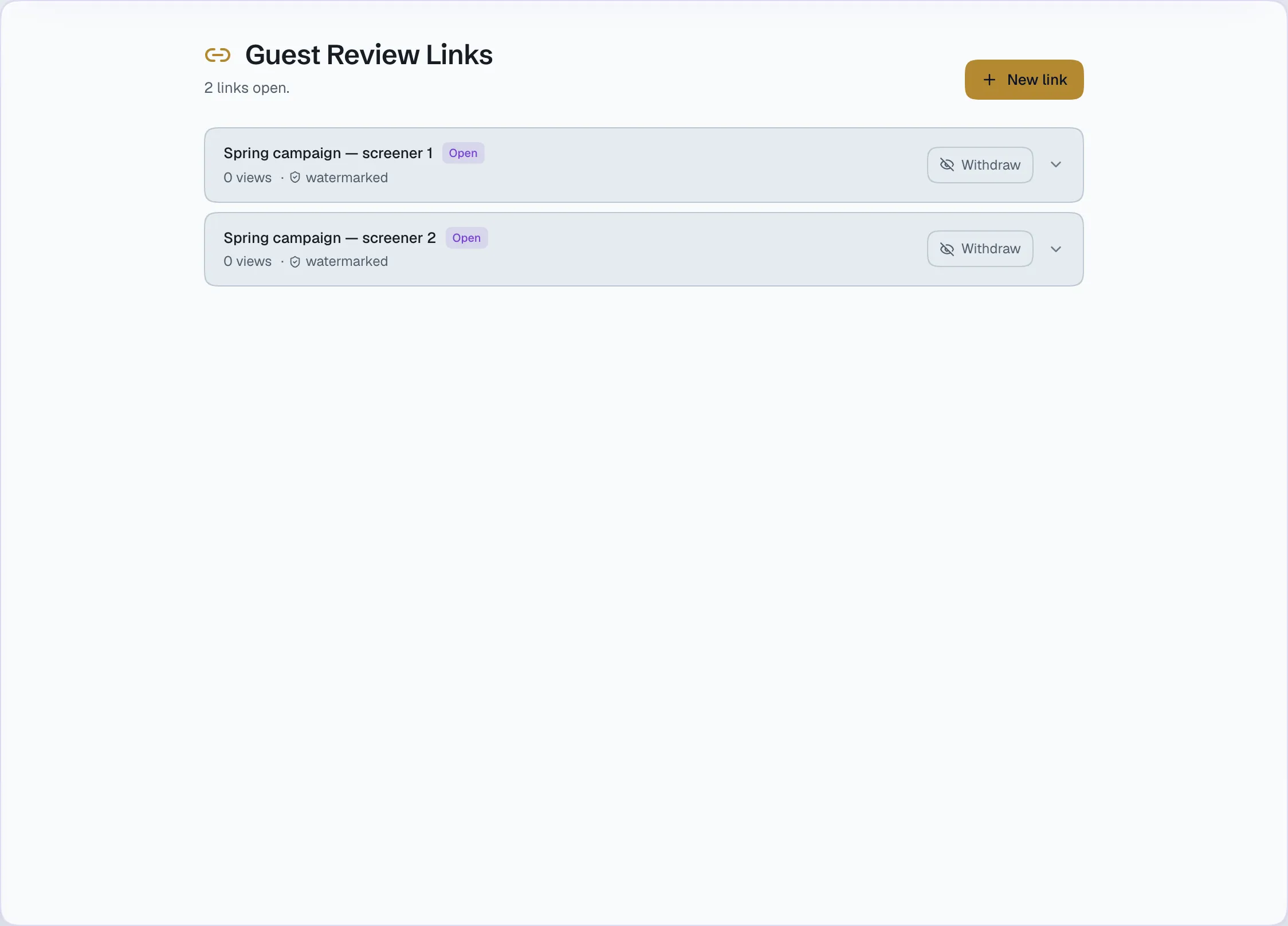
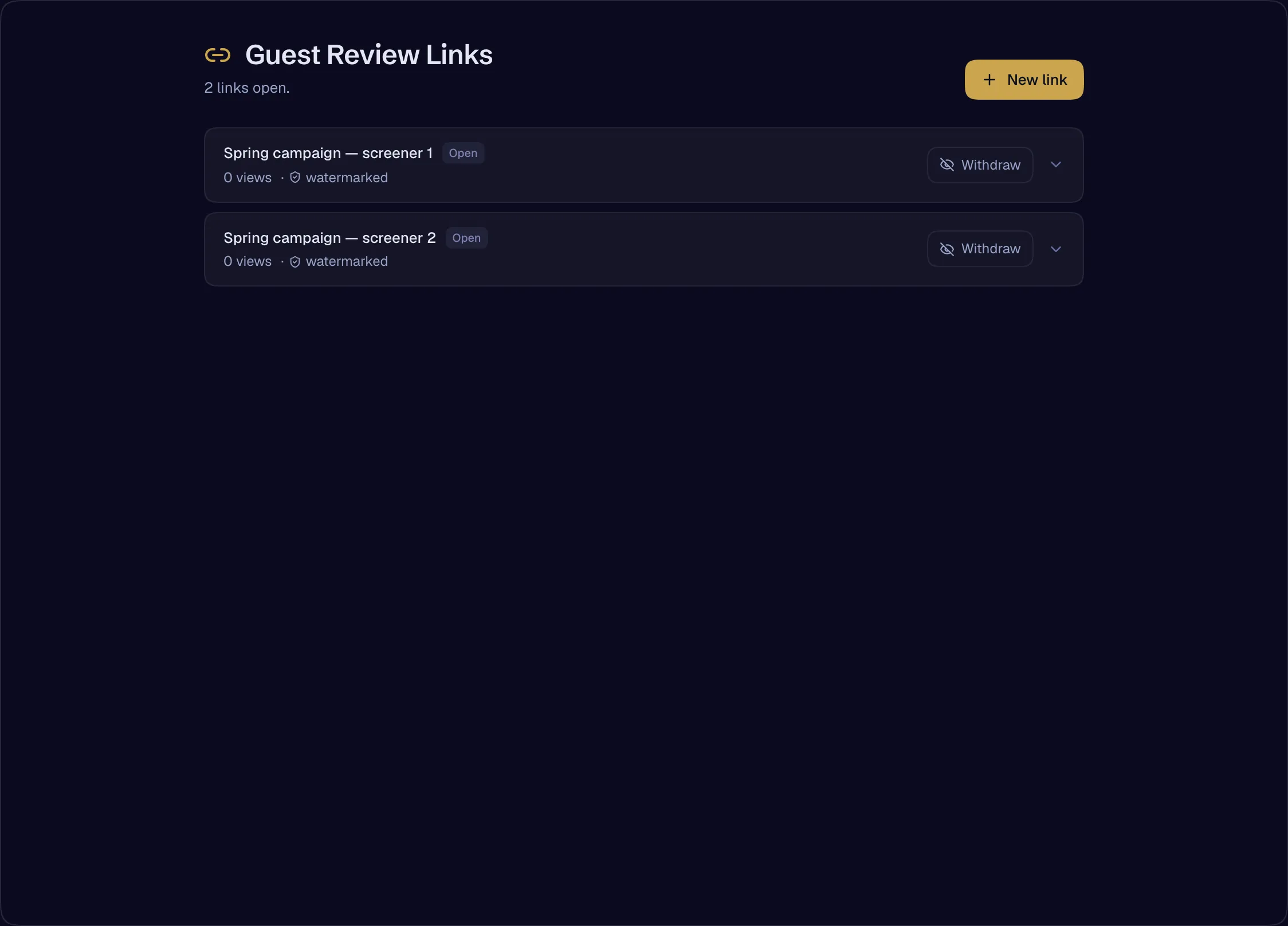
Share a cut with somebody who has no account, through a link with a passcode, an expiry and a view limit. The link’s token is never stored, only its fingerprint. The studio sees how far each guest watched, as a bar.
- The screening room — guest links for people without accountsAvailable
- Watch evidence joined to the approvalAvailable
- Guest review notes as evidence; resolve and tag as ledger eventsAvailable
A watermark that names the viewer
Every guest sees their own identity moving across the frame, aimed at the way cuts actually leak: a screen recorder. It is a session watermark, not forensic marking — and under reduced motion it stops moving but stays.
- Session watermarking on screening links — session watermarking onlyAvailable
The library
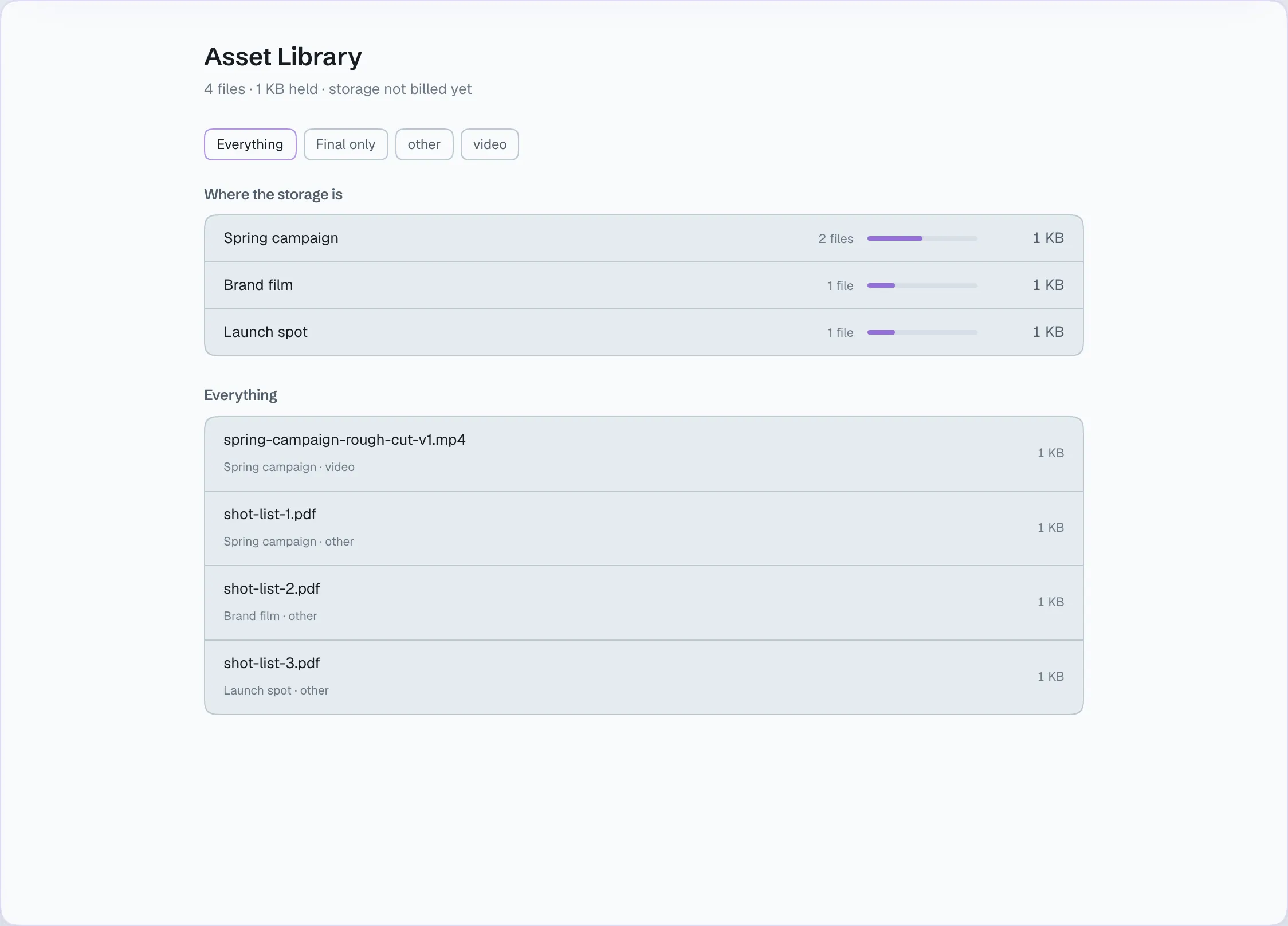
Every asset across the studio, with facets and each production’s footprint.
- A studio-wide asset library with facets and a per-production footprintAvailable
Open a studio, invite your team, add your first client. The record starts with the first approval.